Excavator Bucket Floor Rebuild with Wear Bar Protection in Troy MO
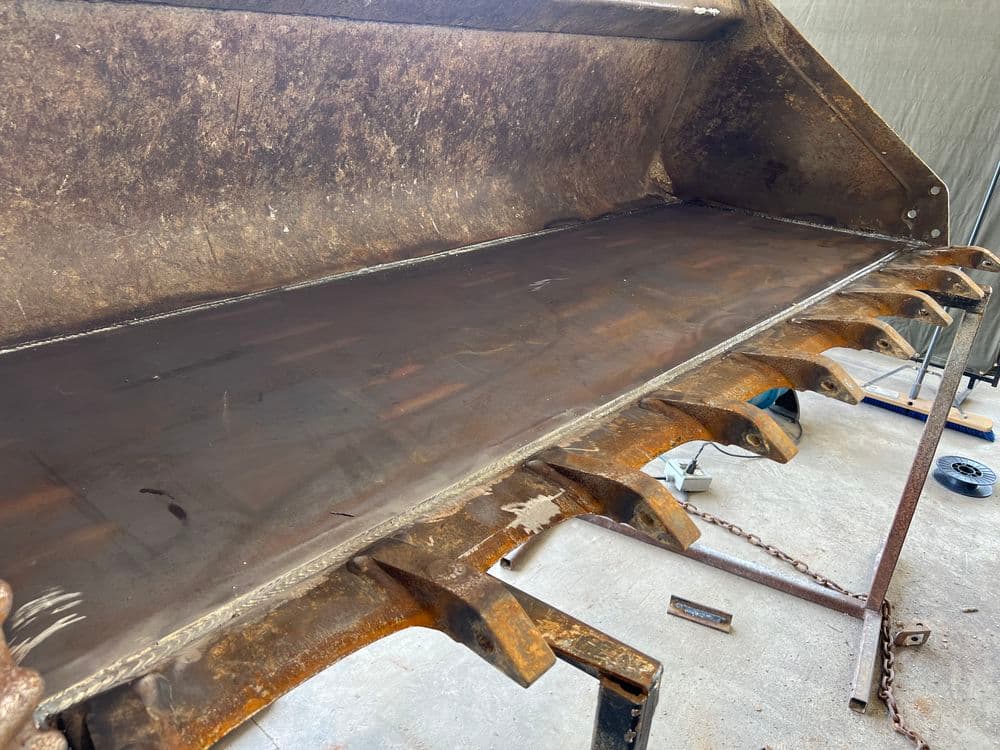
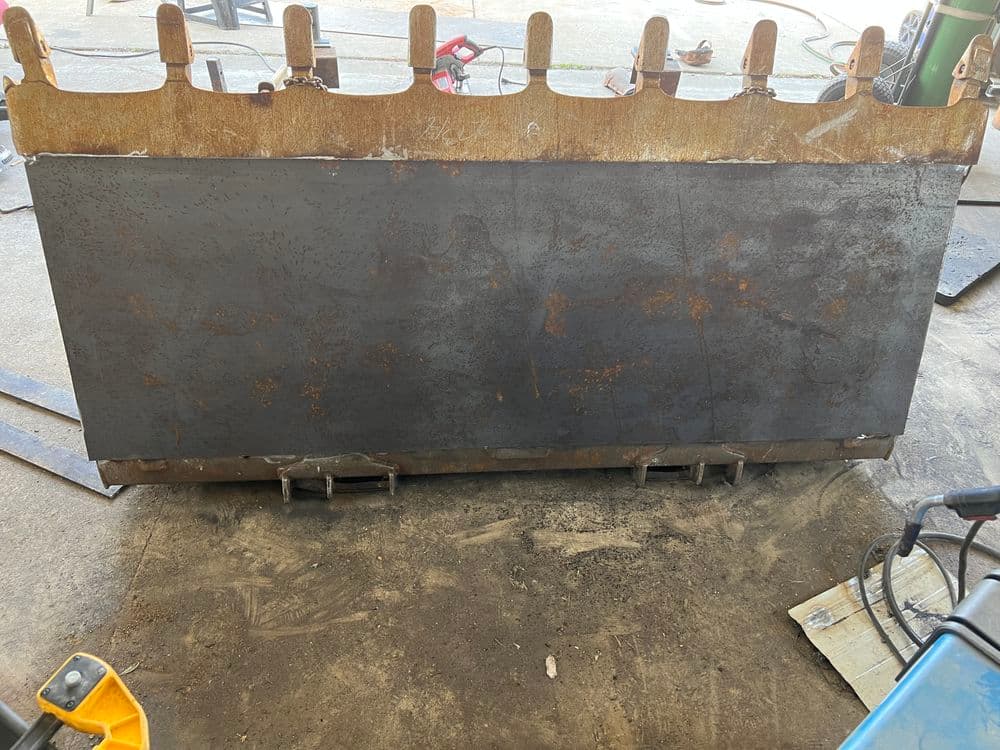
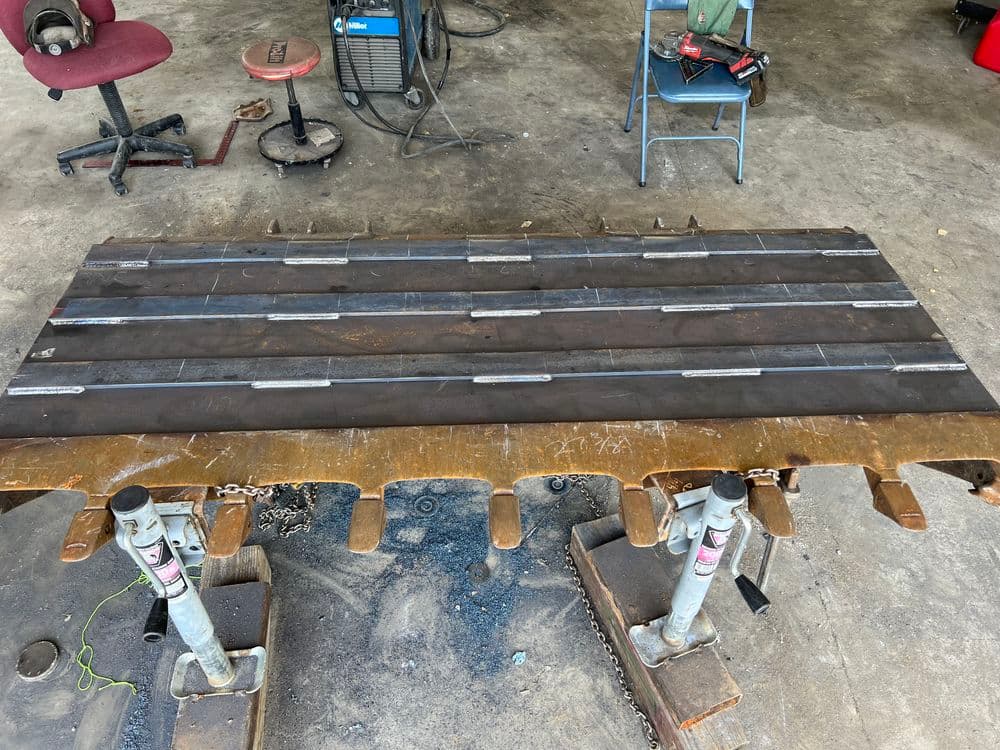
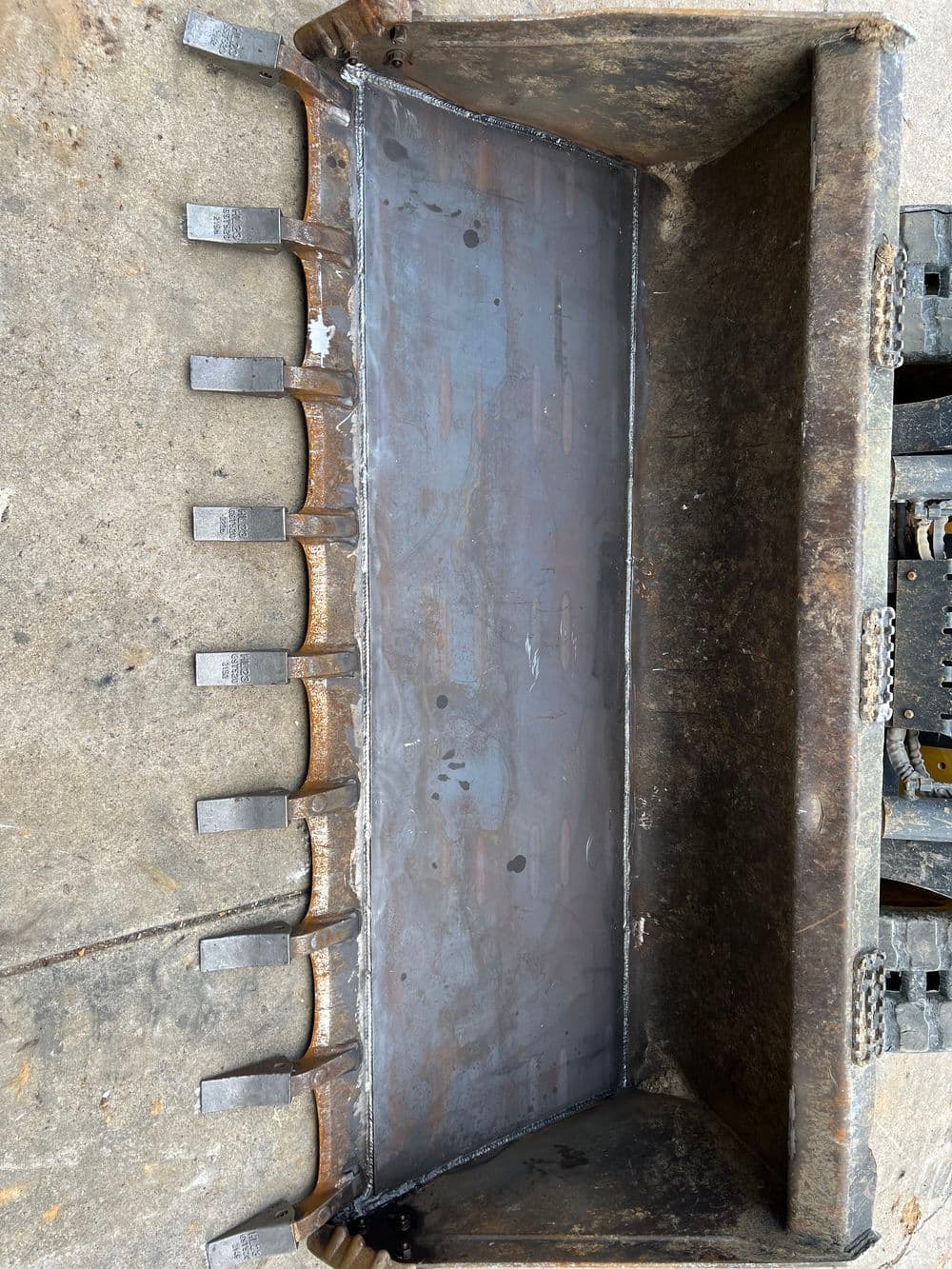
Skid steer buckets take a beating. The floor is the first thing to go - constant abrasion from rock, dirt, and debris grinds right through the steel over time. When a bucket came to us needing a complete floor replacement, we stripped out the worn floor entirely and started fresh.
Here's what that process actually looks like. We cut and fit new heavy-duty wear plate steel to match the bucket's geometry, tack everything into position, then run full perimeter welds to lock it in place. Getting the fit right before welding matters a lot - a floor that's off even slightly can throw off how the bucket seats against the cutting edge and teeth.
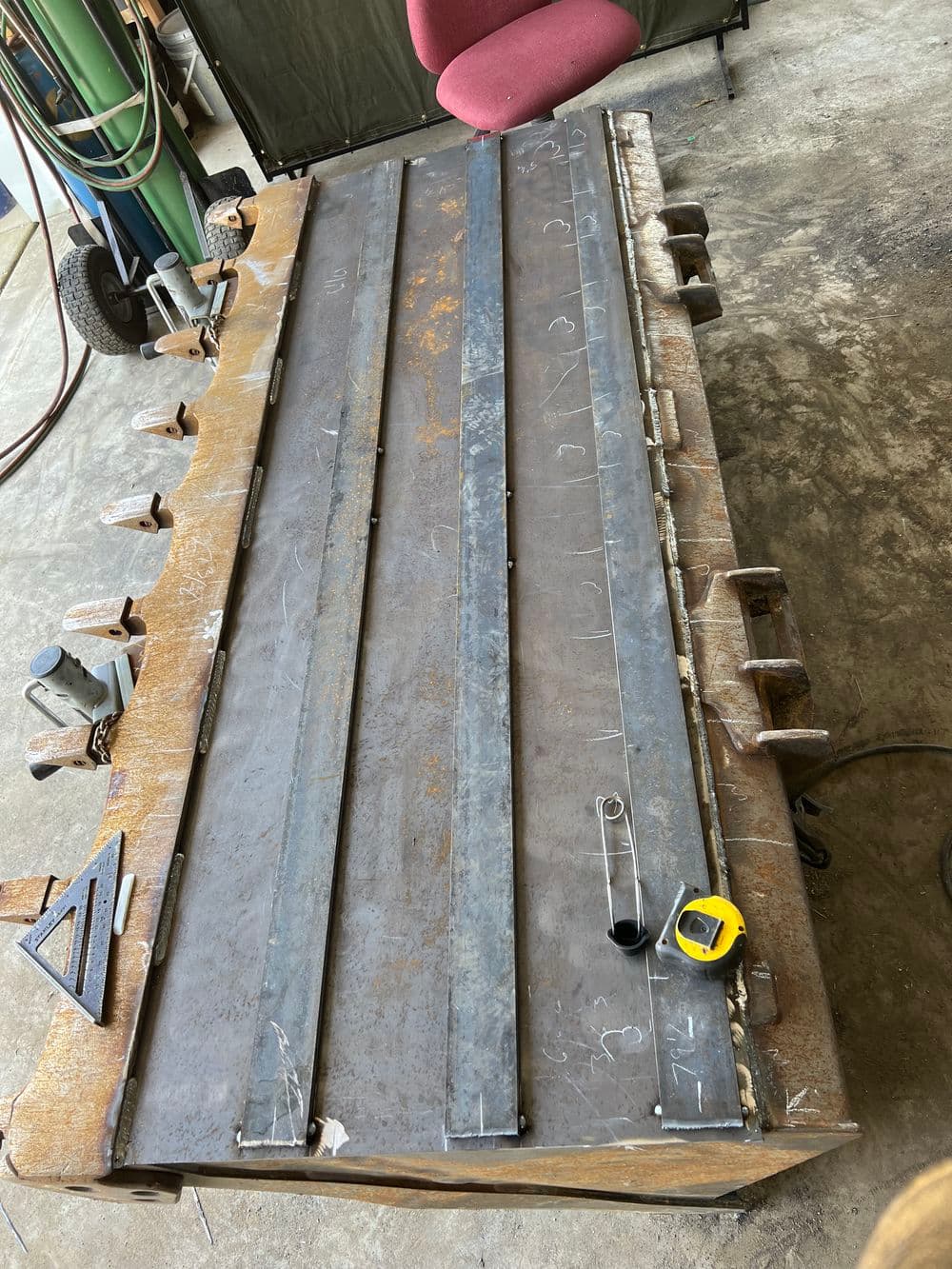
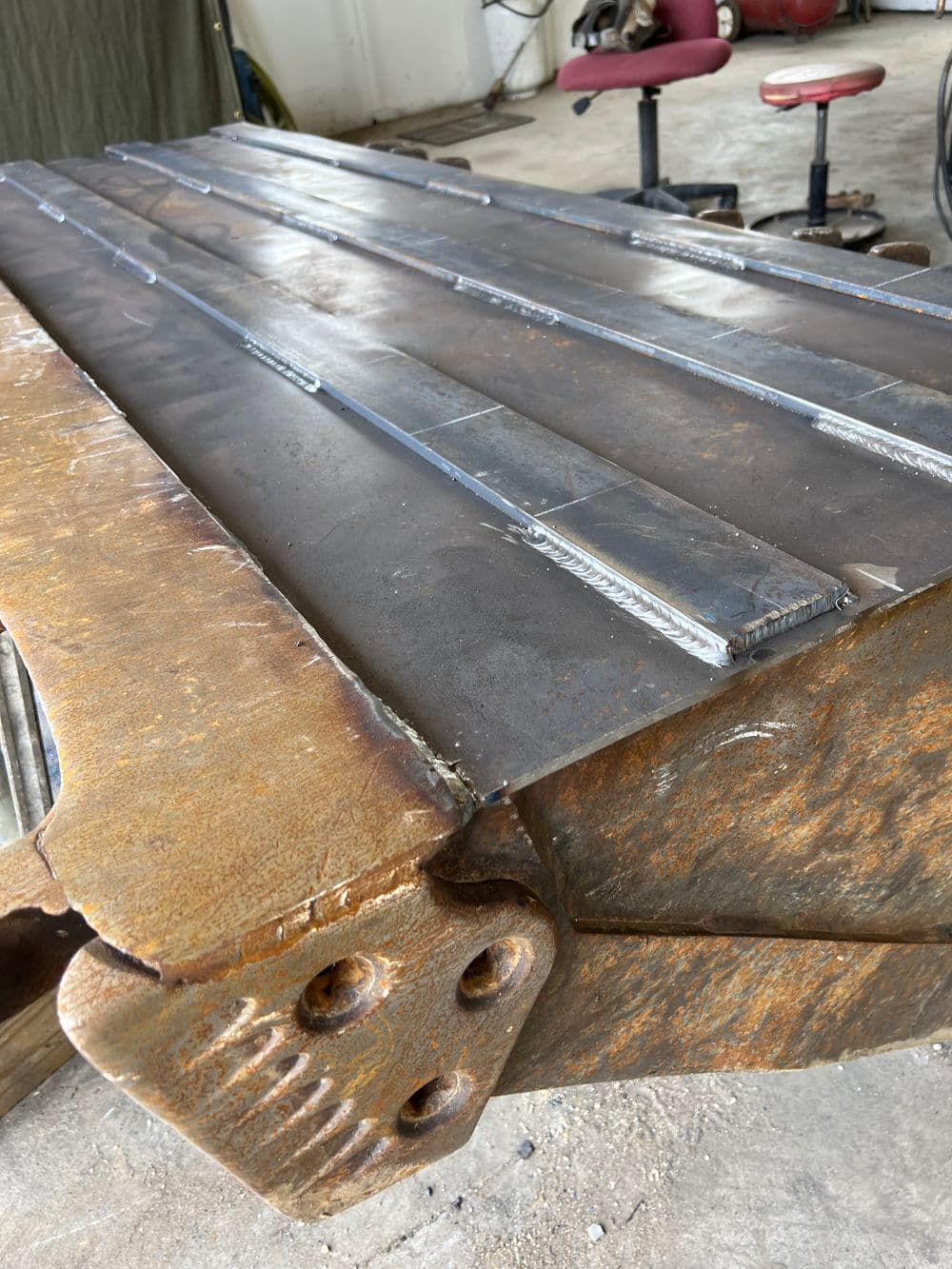
Once the new floor was welded in, we added multiple wear bars across the bottom. Those bars are the key to making this repair last. They take the abuse instead of the floor plate, protecting the new steel underneath. It's the same concept as putting skid plates on a truck - you're building in a sacrificial layer so the structural material behind it doesn't wear through again.
Every weld on this bucket was laid out carefully, measured, and checked for fit before we committed to it. The bucket needs to go back to work and hold up under real load. That means clean welds, good penetration, and no shortcuts on the prep work. That's the standard we hold every repair to, whether it's a bucket floor, a cracked boom arm, or a custom fabrication job.
We handle this type of work regularly at our shop in Troy, MO - bucket floor replacements, wear bar installation, cutting edge swaps, hardfacing, crack repairs, and more. If your equipment is worn down and costing you productivity, bring it in and we'll get it sorted out.